

Imagine receiving a delivery of five hundred sheets and towels, and counting every single one by hand. Now imagine doing that several times a day, every day. Clearly, manual counting at that scale wastes hours and still produces errors. Meanwhile, large hotels, hospitals and commercial laundries move exactly these volumes constantly — so the counting problem never goes away.
Purpose-built RFID linen management removes that bottleneck entirely. Instead of counting item by item, you pass linen through a reader and count hundreds automatically in seconds. So in this post, we’ll show how RFID works across a high-volume linen operation — and how the right system tracks every item’s count, lifecycle and location without the manual grind.
Why High-Volume Linen Counting Breaks Down
Counting large quantities of linen by hand creates predictable problems. For example:
- Manual counts of hundreds of items eat huge amounts of staff time.
- Human error creeps in, so receiving and dispatch numbers drift.
- Nobody knows how many wash cycles an item has survived.
- Linen disappears, yet no one can pinpoint where it went.
- Bulk movements slow the whole operation at peak times.
Because these problems scale with volume, they hit exactly the businesses that can least afford delays. Fortunately, RFID linen management solves them by reading many tags at once, automatically.
Follow Linen Through an RFID-Powered Cycle
Here’s how RFID linen management works, step by step.
1. Tag Each Item With RFID
First, each linen item receives an RFID tag that survives repeated washing. Because the tag stays embedded through the item’s life, it carries a permanent identity. As a result, every sheet and towel becomes individually trackable — even in a pile of hundreds.
2. Bulk Count on Receiving
Next, at receiving, staff pass linen near an RFID reader, which counts many tags at once. Since the reader records hundreds of items in seconds, intake becomes instant and accurate. Consequently, you replace long manual counts with a quick, reliable scan.
3. Track the Lifecycle
Then the system logs each item’s history as it cycles through use and washing. Because RFID records every pass, you know how many cycles an item has endured. So you retire worn linen at the right time instead of letting it embarrass you in service.
4. Track Location Across the Operation
Now RFID reads tell you where linen sits — in receiving, in processing or dispatched. Therefore, you always know the location of your stock. So when linen seems to go missing, you check its last read and investigate immediately.
5. Bulk Count on Dispatch
Finally, at dispatch, another bulk read confirms exactly what’s leaving. Because both ends of the cycle are counted automatically, your records stay accurate throughout. Ultimately, you reconcile receiving and dispatch effortlessly, every time.
Automatic Bulk Counting: The Key to Scale
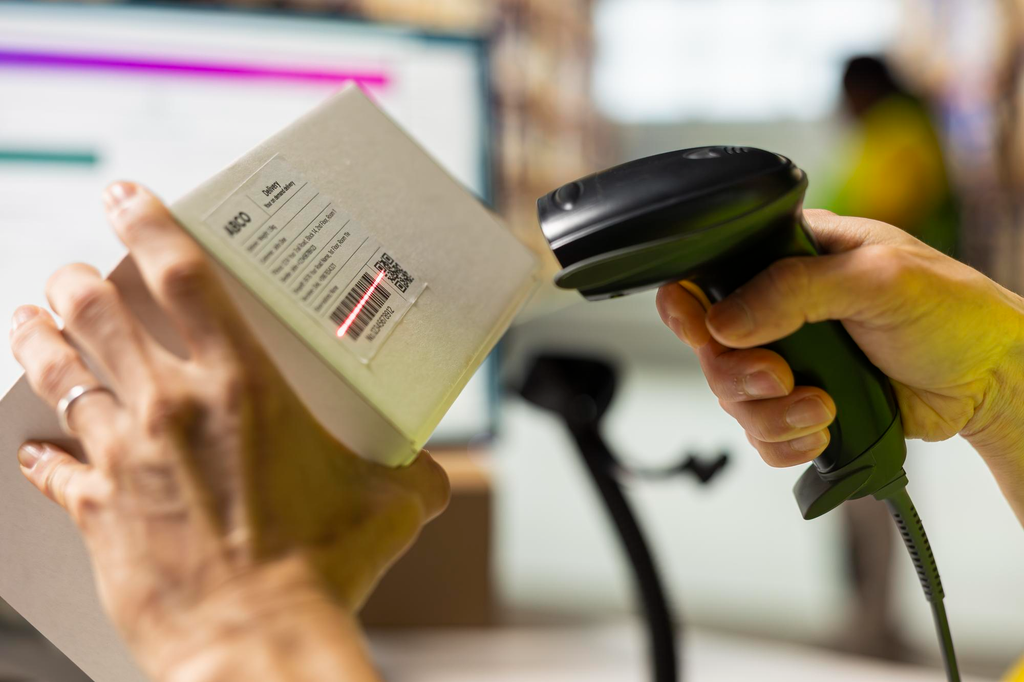
The biggest advantage of RFID linen management is automatic bulk counting. When you move hundreds of items at once, only reading many tags simultaneously keeps up. So instead of counting piece by piece, you count entire loads in a single pass.
Moreover, automatic counting sharpens accountability. Because every receipt and dispatch is recorded precisely, discrepancies surface immediately rather than months later. So you catch losses while the trail is still fresh. Therefore, RFID turns linen from an untracked cost into a measured, managed asset.
Key Features of RFID Smart Linen Management
When you evaluate RFID linen management, look for these essentials:
- RFID tags and readers — identify wash-durable items automatically.
- Bulk counting — count hundreds of items in seconds at receiving and dispatch.
- Lifecycle history — record wash cycles and retire linen on time.
- Location tracking — always know where your linen sits.
Because these features work together, you manage huge linen volumes with speed and precision that manual counting can never reach.
Why RFID Beats Manual and Even Barcodes at Scale
Above all, RFID protects both time and accuracy at high volume. When a reader counts a whole load at once, you save hours and eliminate miscounts. In contrast, manual counting — and even one-by-one barcode scanning — struggles when hundreds of items move together.
In addition, RFID strengthens control over your most repeated cost. Because you track lifecycle and location automatically, you reduce losses and replace linen only when truly needed. Therefore, the same technology that speeds up counting also protects your linen budget.
Bring RFID Precision to Your Linen
At high volume, manual counting will always cost you time and accuracy. Instead, RFID linen management from a platform like FabKlean gives you wash-durable tags, automatic bulk counting, lifecycle history and location tracking — so you manage hundreds of items as easily as a handful.
Ready to count hundreds of linen items in seconds? Book a free FabKlean demo today and see RFID smart linen management in action.